Guides
Shopping Chauffeur Paris: Planning a Flexible Luxury Retail Day
Plan a Paris shopping day around districts, appointments, vehicle capacity and secure, realistic timing rather than a long store list.

A shopping chauffeur in Paris keeps one vehicle available while guests move between boutiques, private appointments, lunch and the hotel. The most efficient plan groups stores by district, chooses enough enclosed space for purchases and treats reservations as schedule anchors. Flexibility works best when the day has priorities, not an unlimited list.
This guide explains how to plan a Paris shopping day with a chauffeur with clear timings, responsibilities and operating limits.
Key takeaways
- Group boutiques by district
- Choose capacity for people and purchases
- Use reservations as anchors
- Keep purchases discreet and attended
What a shopping chauffeur Paris day adds
The service is not simply transportation between stores. It gives the day continuity: a known pickup point, a place to pause between appointments and a vehicle sized for the people and items involved. It also reduces the need to manage a new driver after every purchase, particularly when the itinerary changes because a fitting or consultation takes longer.
The practical task is to convert that insight into instructions that can be checked. Before confirming the service, decide who needs each detail, when it must be updated and which change would affect price, timing or vehicle capacity. A useful itinerary does not pretend to predict every minute. It makes priorities, assumptions and operating limits visible.
- Share priority boutiques
- State private appointment times
- Identify the final hotel return
Plan Paris by retail district
Avenue Montaigne, Faubourg Saint-Honoré, Place Vendôme, Saint-Germain and Le Marais are different operating zones. Trying to alternate between them wastes the very flexibility being purchased. Group the day geographically, then choose one or two optional stops in the same area. This leaves more time in stores and less time watching the route on a phone.
The practical task is to convert that insight into instructions that can be checked. Before confirming the service, decide who needs each detail, when it must be updated and which change would affect price, timing or vehicle capacity. A useful itinerary does not pretend to predict every minute. It makes priorities, assumptions and operating limits visible.
- Choose a morning district
- Book lunch near the afternoon area
- Keep optional stores local
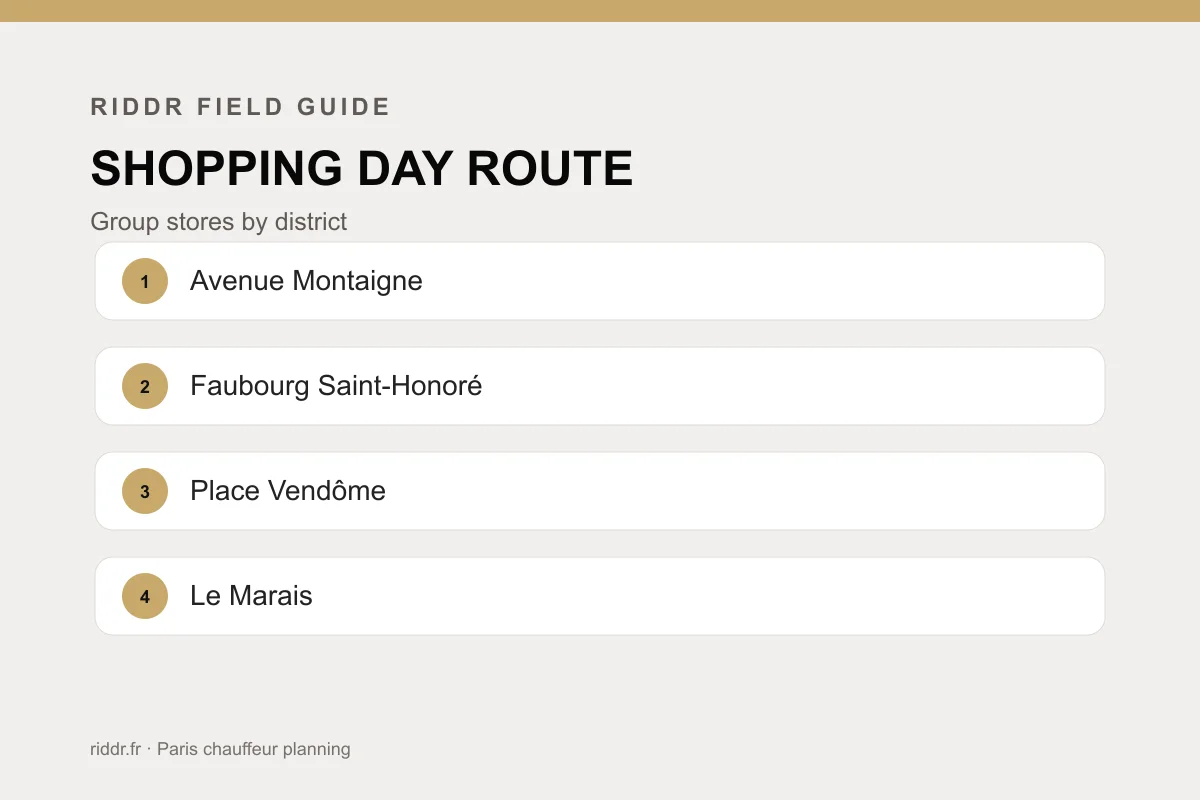
Use appointments as anchors
Private showroom visits, personal shopping sessions, fittings and restaurant reservations should shape the itinerary. Open browsing fits around them. If an appointment is delayed, the coordinator can remove a lower-priority stop without threatening the next commitment. A chauffeur can support flexibility, but cannot create time that the retail plan has already overbooked.
The practical task is to convert that insight into instructions that can be checked. Before confirming the service, decide who needs each detail, when it must be updated and which change would affect price, timing or vehicle capacity. A useful itinerary does not pretend to predict every minute. It makes priorities, assumptions and operating limits visible.
- Rank every reservation
- Add contact details
- Mark stores that can be dropped
Select space without oversizing
A sedan is elegant and efficient for two guests with modest purchases. A V-Class offers more access and enclosed room for a group, assistant or larger shopping day. Explain the likely volume before booking. Purchases should not block passenger comfort or remain visibly exposed in an unattended vehicle.
The practical task is to convert that insight into instructions that can be checked. Before confirming the service, decide who needs each detail, when it must be updated and which change would affect price, timing or vehicle capacity. A useful itinerary does not pretend to predict every minute. It makes priorities, assumptions and operating limits visible.
- Estimate purchase volume
- Mention assistants
- Keep valuable items out of public view
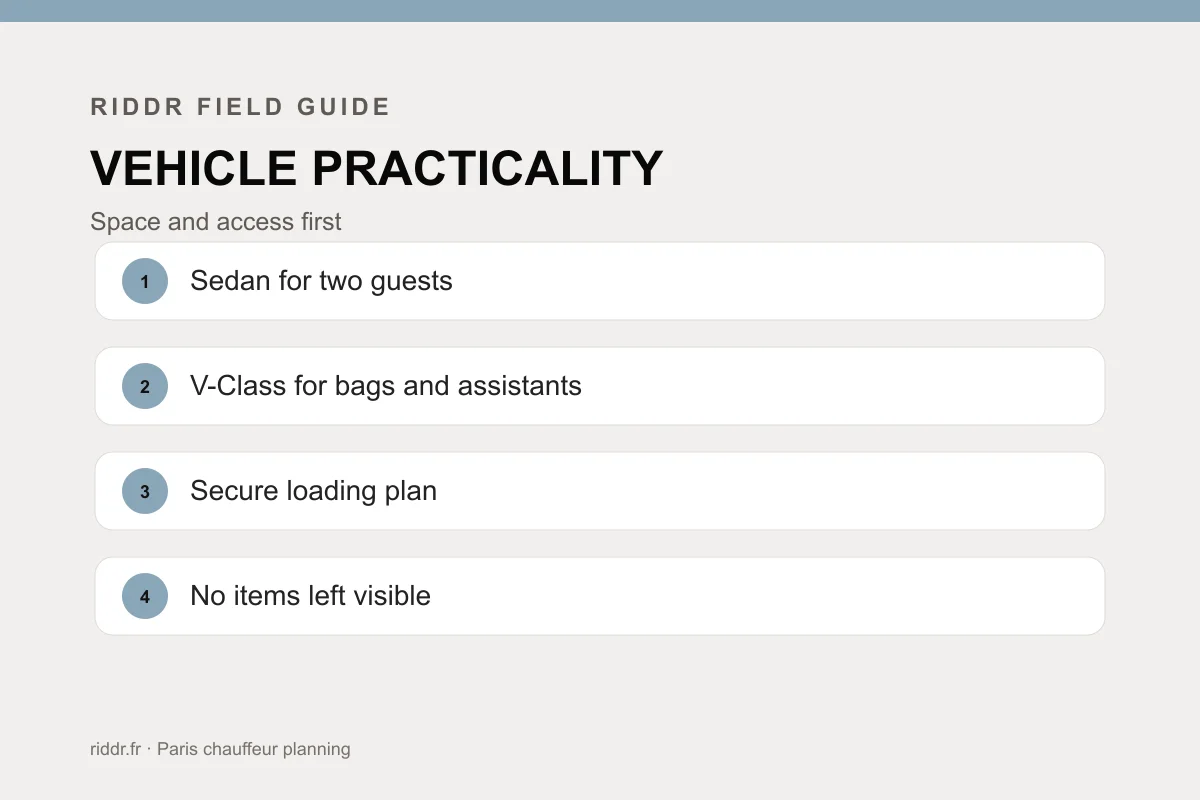
Plan loading and hotel returns
A useful shopping itinerary may include one interim hotel return to unload before dinner or before moving to a smaller vehicle. That pause can be more practical than carrying the entire day through every stop. The hotel procedure, guest presence and responsibility for the items should be clear rather than assumed.
The practical task is to convert that insight into instructions that can be checked. Before confirming the service, decide who needs each detail, when it must be updated and which change would affect price, timing or vehicle capacity. A useful itinerary does not pretend to predict every minute. It makes priorities, assumptions and operating limits visible.
- Consider an unload window
- Confirm who receives purchases
- Do not leave items without an agreed handover
Keep the day private and simple
The chauffeur needs operational details, not purchase values or personal shopping history. Share names, times, addresses and access instructions. Avoid circulating the guest itinerary across unnecessary group chats. Discretion comes from limiting information and using a controlled contact channel, not from making exaggerated promises.
The practical task is to convert that insight into instructions that can be checked. Before confirming the service, decide who needs each detail, when it must be updated and which change would affect price, timing or vehicle capacity. A useful itinerary does not pretend to predict every minute. It makes priorities, assumptions and operating limits visible.
- Share minimum necessary data
- Use one coordinator
- Delete obsolete itinerary versions
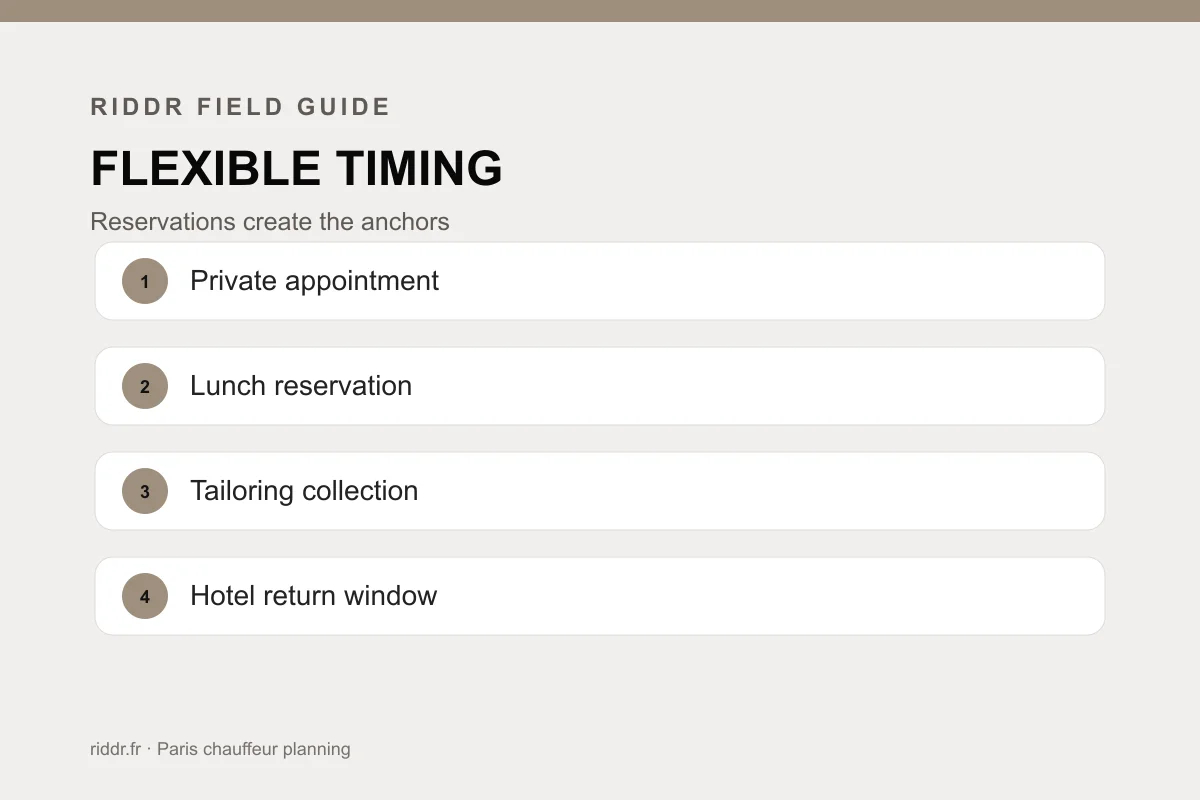
A worked schedule example
- 10:00 Avenue Montaigne appointment
- 12:30 lunch nearby
- 14:00 Place Vendôme
- 16:30 optional Saint-Germain stop
- 18:00 hotel unload
This example is not a universal duration claim. It shows how a useful brief combines commitments, margin and a defined finishing point. Dispatch can quote and plan more accurately when it knows which parts are mandatory and which may move if the day changes.
Mistakes that create avoidable friction
- Crossing Paris repeatedly for optional boutiques
- Underestimating bag and garment space
- No time reserved for fittings
- Leaving the final unload plan undefined
These errors look minor on a spreadsheet, yet they usually surface after the vehicle is already in service. Fixing them in advance reduces messages, waiting and disagreement between what the client imagined and what the provider priced. The strongest chauffeur plan is often the one with the fewest unresolved assumptions.
How to request an auditable quote
Send the date, Paris local start time, expected duration, passenger count, preferred vehicle and main stops. Add language, materials, child seats or access requirements. Ask the proposal to state included hours, extension conditions and exceptional expenses. For a schedule-based proposal, review Riddr's hourly chauffeur hire in Paris and Paris chauffeur booking form. For a different service format, the multi-day Paris chauffeur service provides the next relevant step.
Frequently asked questions
Will the chauffeur carry purchases?
Reasonable assistance can be discussed, but responsibility and hotel handover arrangements should be agreed clearly.
Which vehicle is best for shopping?
A sedan can suit two guests; a V-Class is usually more practical for groups, assistants or significant purchase volume.
Can stores be added during the day?
Yes, when the new stop fits the booked time, operating area and remaining fixed appointments.
Related guides and services
Final recommendation
The quality of a chauffeur service is largely decided before the vehicle door opens. A prioritized itinerary, one authorized contact and a written scope turn flexibility into a controlled operation. Riddr's position is simple: describe the real day, including uncertainty, rather than requesting a generic rate and hoping every later requirement is included.